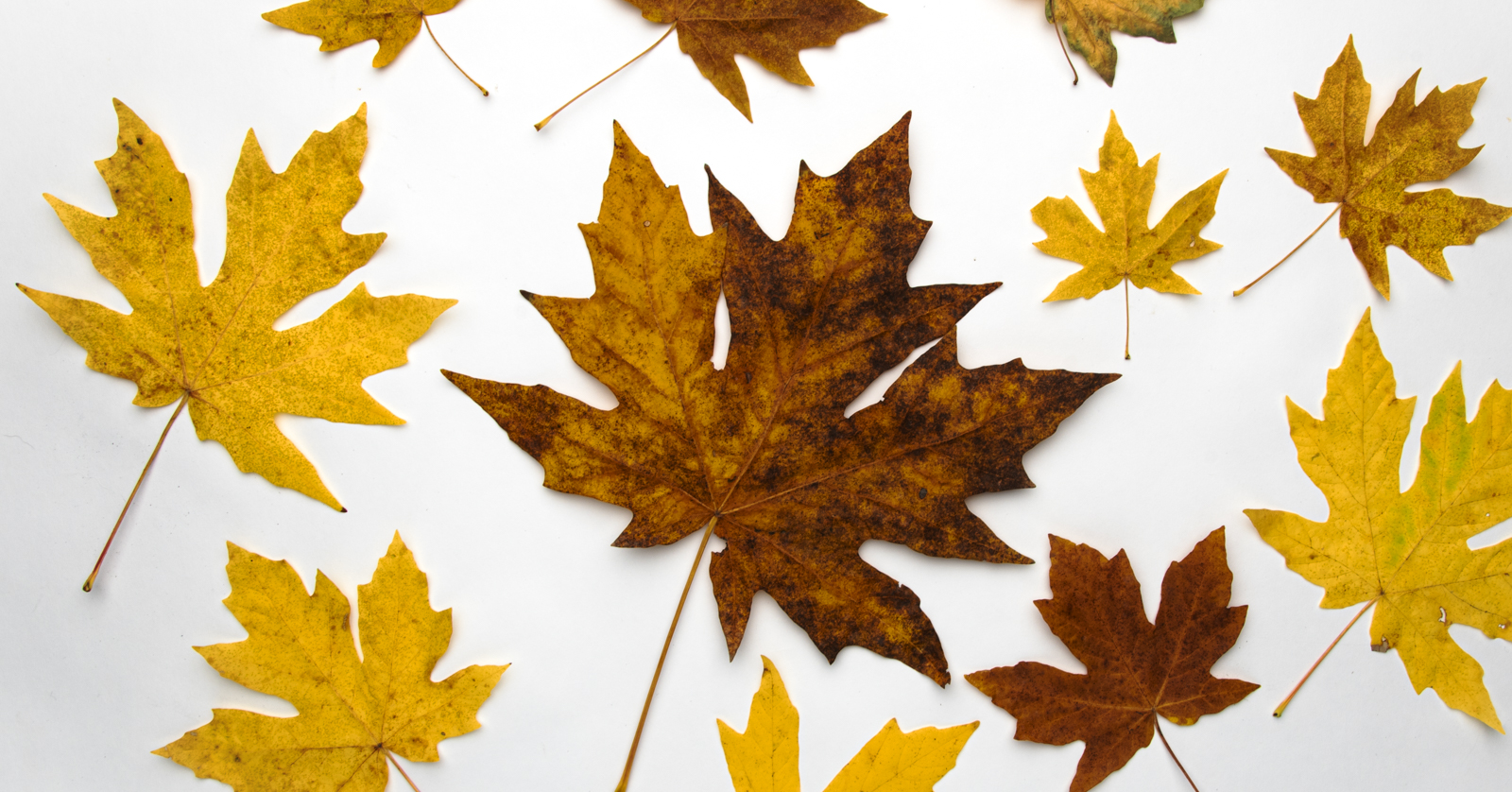
I was out for a walk recently on a rainy October Sunday. The rain is welcomed after a long dry summer and soon the winter rains will return in earnest, swelling the creeks and rivers to their full potential once again.
The forest near my house, a five-minute walk from my front door, is a mix of cedar, Douglas fir, hemlock, and Bigleaf maple. The understory is a lush covering of Oregon grape, salal, ferns, mushrooms, and other plant and animal wonders of this small, urban, piece of coastal rain forest.
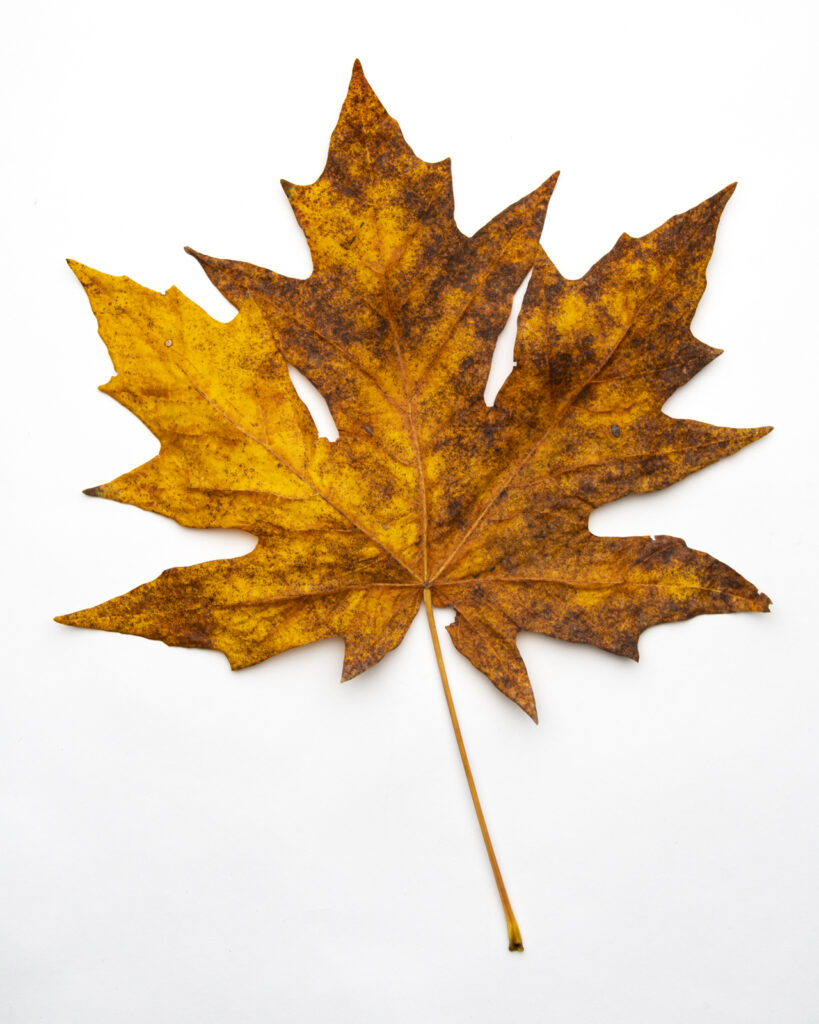
A single leaf from the Bigleaf Maple can easily be 12-18 inches across.
Walking through this forest is always a pleasure at any time of year, but fall has its own appeal. Even in the rain, there’s a different kind of peace in the woods, a quiet, restful energy seems to be settling in. It feels as if nature is slowly tucking herself in for the winter. After a busy spring and summer of growth and production, fall becomes a time to slow down and reflect, a time for letting go. Autumn teaches us that letting go is not a bad thing, rather it is something we need to do to make room for new beginnings, new ideas, and new ways of being that will surely come after a deep rest.
The Maple Leaf
As I walked among the vibrant colours of changing leaves, the muted earth tones of the wet trail, and the electric greens of moss and lichen glistening with raindrops, I began to see a metaphor emerging in the fallen maple leaves.
The maple leaf has long been a symbol of Canada but the tree itself has been valued by Indigenous peoples as a source of sap, food, medicine, and wood, as well as it's many cultural, ceremonial and traditional uses long before the arrival of colonial influences.
In the 19th century, the maple leaf began to appear as a symbol of Canadian identity on coins, badges, and banners. During the world wars it was used as a cap badge for the Canadian Expeditionary Force, solidifying its association with courage and loyalty. The maple leaf was later carved on the headstones of fallen soldiers.
The iconic maple leaf became the centerpiece of Canada’s new National Flag, raised for the first time on February 15, 1965. There was even a song written about the iconic 'Acer' leaf - Maple Leaf Forever, it was written by Canadian poet and songwriter Alexander Muir in 1867 to commemorate Confederation. (see the YouTube link below to hear a version the song)
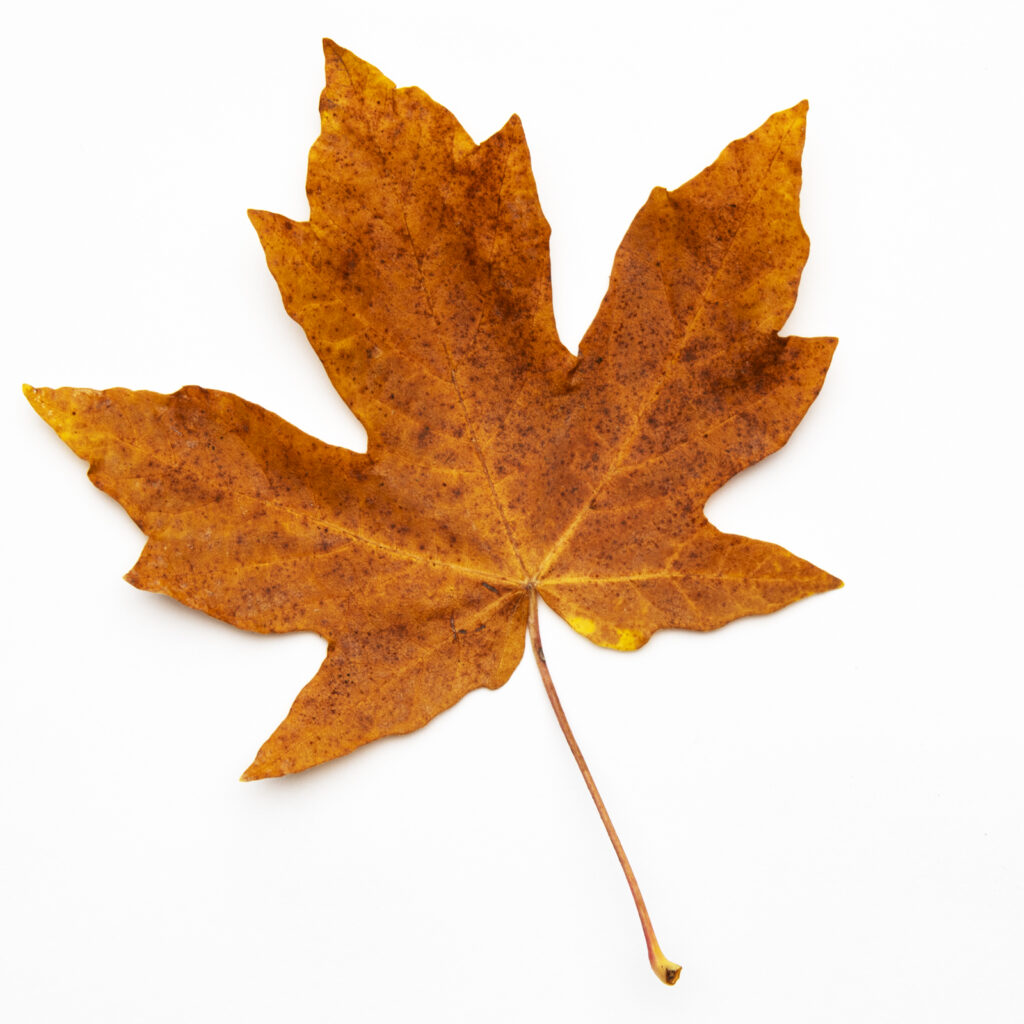
Ten maple species are native to Canada, perhaps the best known being sugar maple, though the Bigleaf Maple is also used to make syrup on the West Coast.
The eleven points on the stylized maple leaf are said to represent all citizens of Canada, regardless of race, language, or belief, bringing us together as one nation and celebrating our diversity as a country of immigrant people.
The leaf also demonstrates our connection to nature and to the vast resources of the land we share. It is a source of pride that represents both Canadian values and our identity in the wider world. It is a symbol used by global travelers, sports teams (go Leafs), and can be found on Canadian currency.
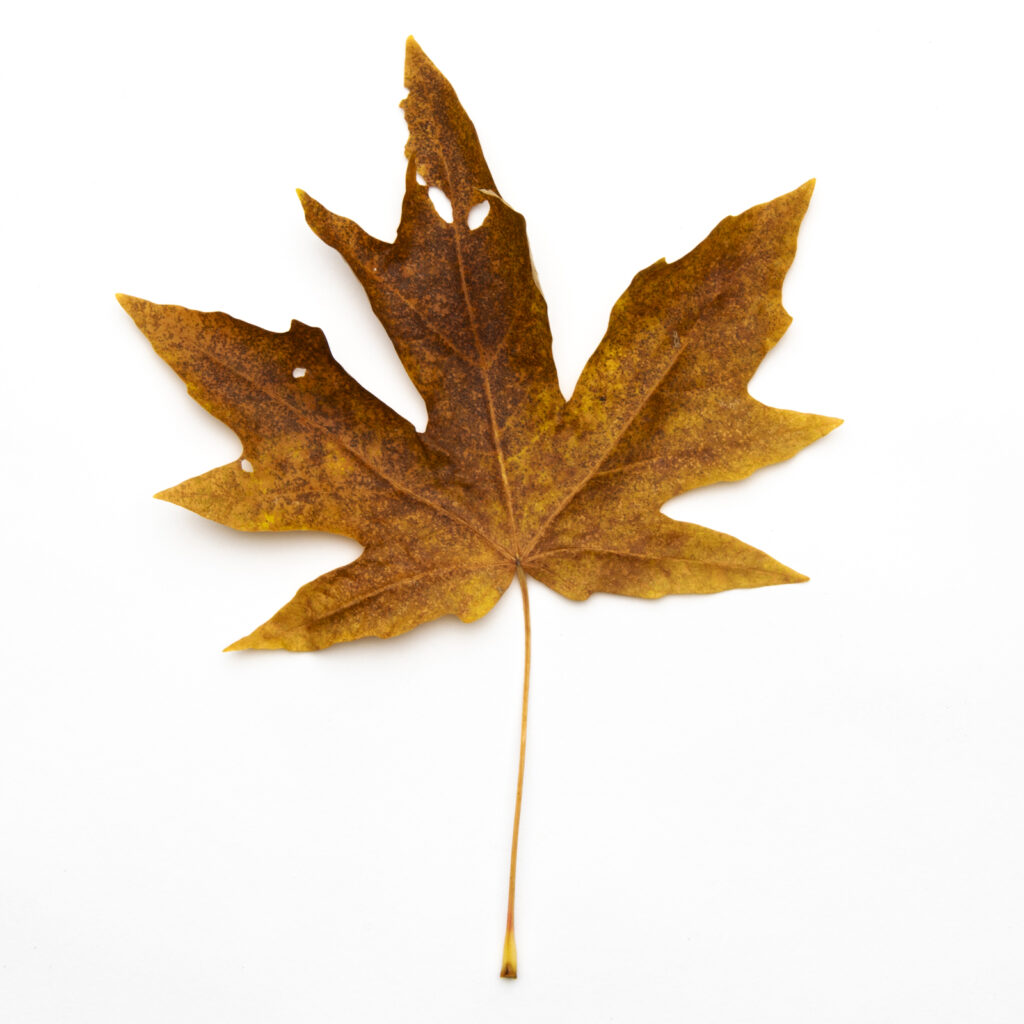
Coastal Indigenous peoples used the large leaves to line cooking pits for baking foods like camas bulbs, or to cover picking baskets.
Reflections on Difference
As I watched the leaves softly falling to the forest floor, I began to look at them more closely. From a distance they all looked the same, but up close their differences became clear. Some were large, some small. Some pale yellow, others dark and mottled. Some looked flawless while others had holes or broken bits. Yet they all had something in common, they all came from the same tree.
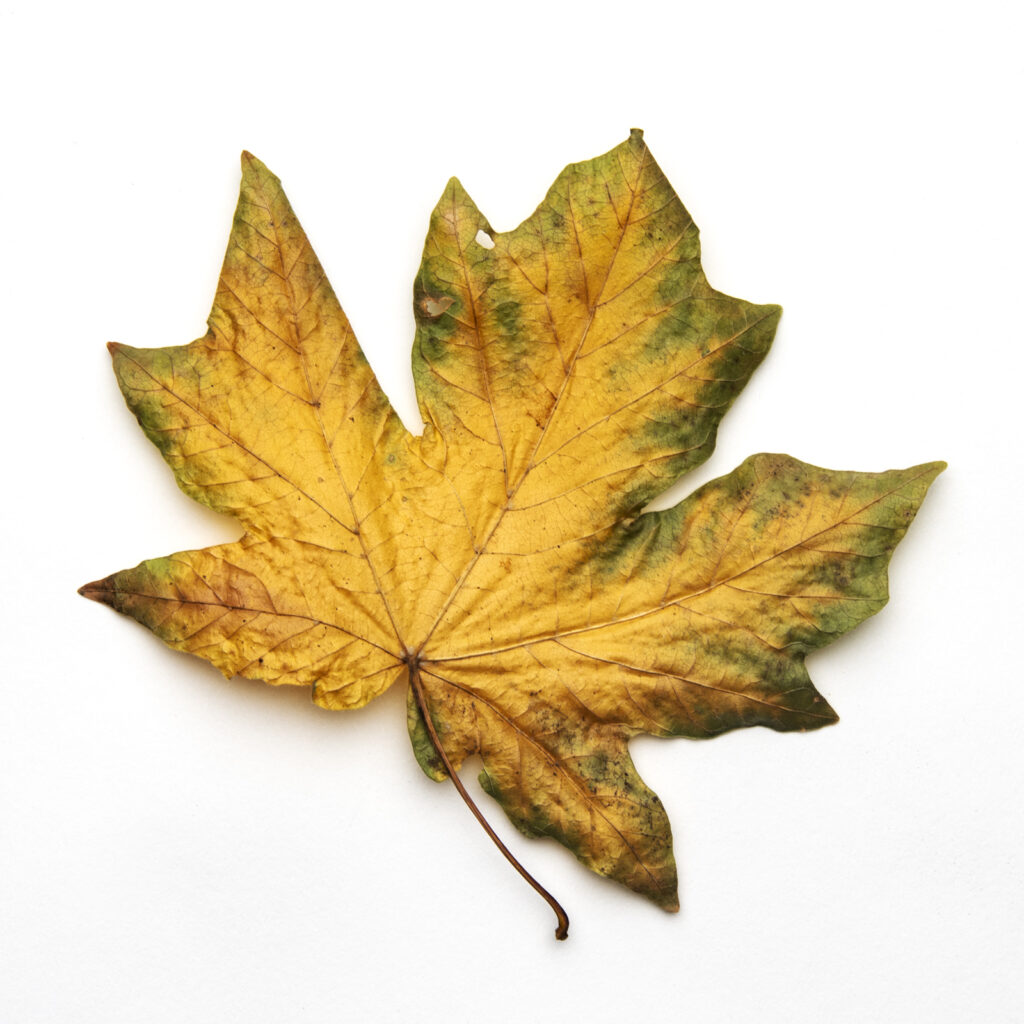
Its leaves provide habitat and resources for many species, including insects and deer, and contribute to stream health.
It made me wonder: if it is possible to look at the maple leaves and appreciate their differences, could we not look at people the same way, with the same appreciation?
Maybe the maple leaf is more than a national symbol. It feels like a reflection of who we are; distinct and imperfect, yet bound together by shared roots. In its simple form, the leaf carries a quiet truth about belonging, community, and renewal.
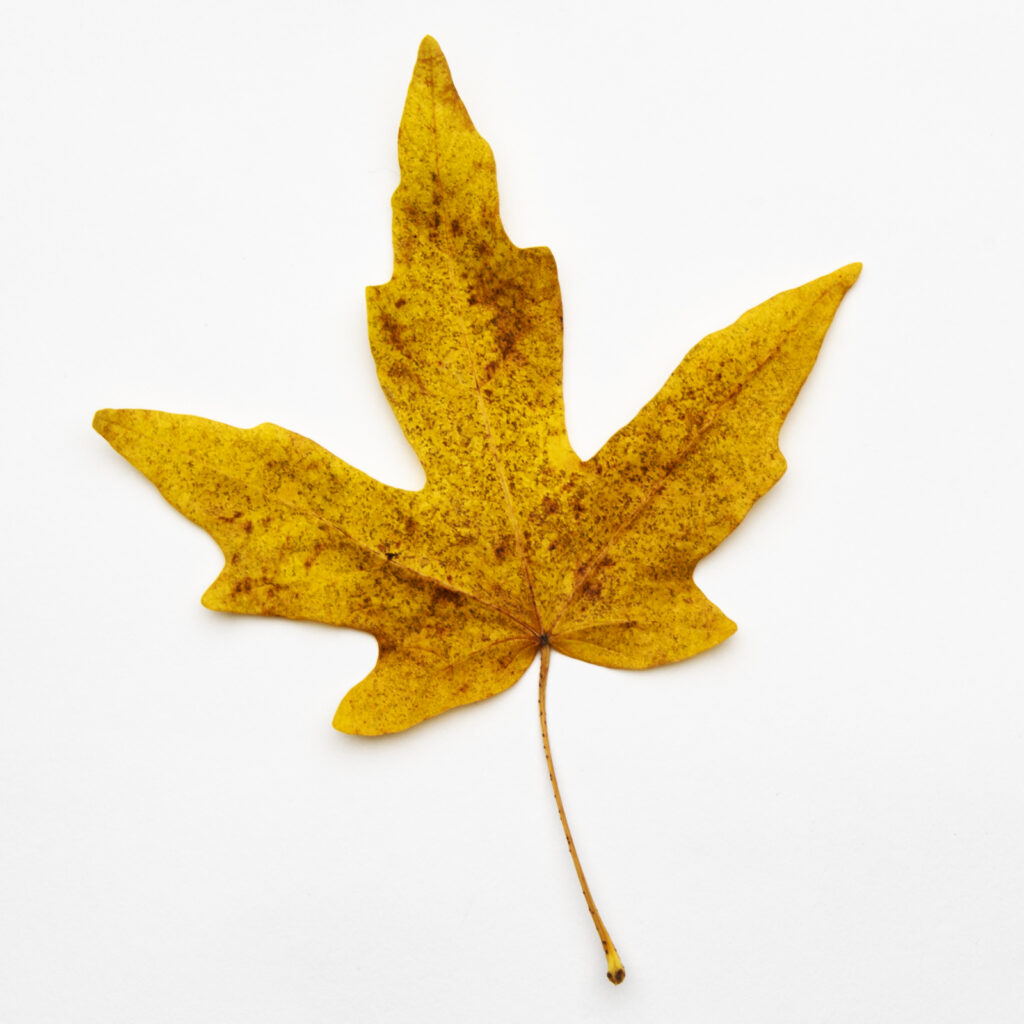
Despite popular belief that the Canadian flag's leaf is a Sugar maple leaf, the design is actually a stylized, eleven-pointed generic maple leaf representing the 10 species native to Canada.
See how the Maple Leaf symbol was used in Canada over time:
Learn More About Canadian Maple Trees here:
https://thecanadianencyclopedia.ca/en/article/maple